
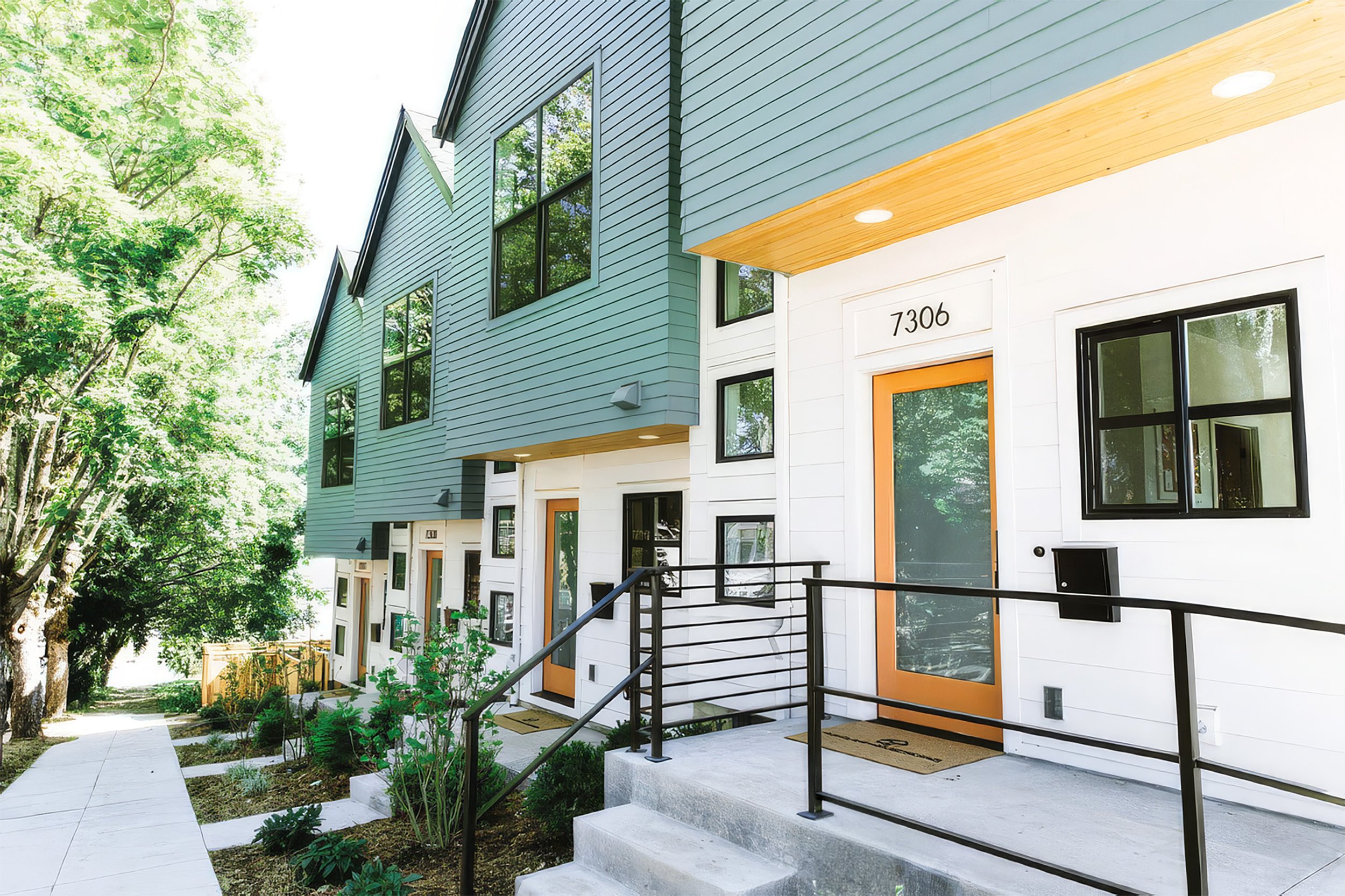
Like many U.S. cities, Portland has grappled with a worsening housing shortage, particularly for households needing smaller, more affordable homes. About a decade ago, 75% of Portland’s residential land was zoned exclusively for detached single-family houses, excluding the middle housing types—duplexes, triplexes, fourplexes, cottage clusters—that had once flourished in the city’s walkable neighborhoods.
“Most people don’t need a 3-bedroom house on a big lot,” said Mary Kyle McCurdy, deputy director of 1000 Friends of Oregon, the state’s land use watchdog. “Yet our zoning had systematically made those smaller options illegal.”
The Solution: A Bold Reimagining of Neighborhoods
The city’s response was a comprehensive rezoning that legalized middle housing in every neighborhood while layering in affordability and anti-displacement tools: the Residential Infill Project (RIP). Under RIP, lots could now accommodate duplexes and fourplexes by-right and even sixplexes if affordable units were included.
McCurdy and her team hired organizers, built a multi-stakeholder coalition, and created story-driven presentations that they delivered to neighborhood associations and brewpub forums across the city.
“We put faces to the need,” she said—first-time buyers, aging parents wanting to downsize, multigenerational families—all shut out by exclusionary zoning.
Navigating Tension, Building Trust
Not everyone was on board. Some affluent homeowners weaponized historic preservation to block change. Others raised legitimate concerns about displacement. McCurdy and her coalition responded by commissioning studies and championing Portland State University professor Dr. Lisa Bates’s anti-displacement framework, which guided the city’s adoption of 12 targeted mitigation policies focused on vulnerable neighborhoods. Simultaneously, Donnie Oliveira, then a senior official at the Bureau of Planning and Sustainability, worked behind the scenes to align departments, clear zoning hurdles, and push RIP across the finish line.
“We didn’t want to just pass a policy,” he explained. “We wanted to implement it well and equitably.”
Outcomes and Ripple Effects
Since adoption, RIP has permitted over 1,400 new housing units and counting. Many are $250–300K cheaper than new single-family homes in the same neighborhoods. Middle housing production has actually increased while development activity has slowed in commercial and multifamily zones. Oregon passed statewide middle housing reforms in 2019.
“Without RIP, Habitat for Humanity couldn’t have built many of the homes we’ve seen completed,” said McCurdy. “It was the zoning change that made them possible.”
The Human Element
What began as a dry land-use process evolved into a people-powered movement.
“I expected it to be frustrating, but it was invigorating,” McCurdy reflected. “We had non-profit developers, home builders, disability advocates, and climate groups all pulling together, not because we always agreed, but because we understood we had to solve this.”
For Oliveira, now Portland’s Deputy City Administrator overseeing housing, permitting, and planning, the lesson is clear:
“Cities need to stop waiting for perfect policies. Get housing built. Measure. Improve. Repeat.”
Lessons for Other Cities
Build Unlikely Coalitions Early Portland’s success came from aligning groups not usually in the same room—builders, environmentalists, equity advocates, and aging-in-place supporters—around a shared vision of housing abundance and fairness.
Center Real People and Lived Experience Organizers made the case by telling human stories, not just showing policy slides. This helped overcome fear-based resistance and built grassroots momentum in skeptical neighborhoods.
Pair Zoning Reform with Anti-Displacement Tool Portland didn’t just upzone, it backed reforms with 12 targeted anti-displacement measures rooted in community-identified risk.
Deliver Policy with Implementation RIP succeeded because city staff like Oliveira cleared red tape and prioritized execution. Success came not just from passing the policy but from making it work on the ground.
Treat Zoning Reform as an Ongoing Practice Portland’s leaders see RIP not as a one-time win but as a new approach to housing policy: act, measure, adapt, and repeat.