

Build Infill on Existing Infrastructure
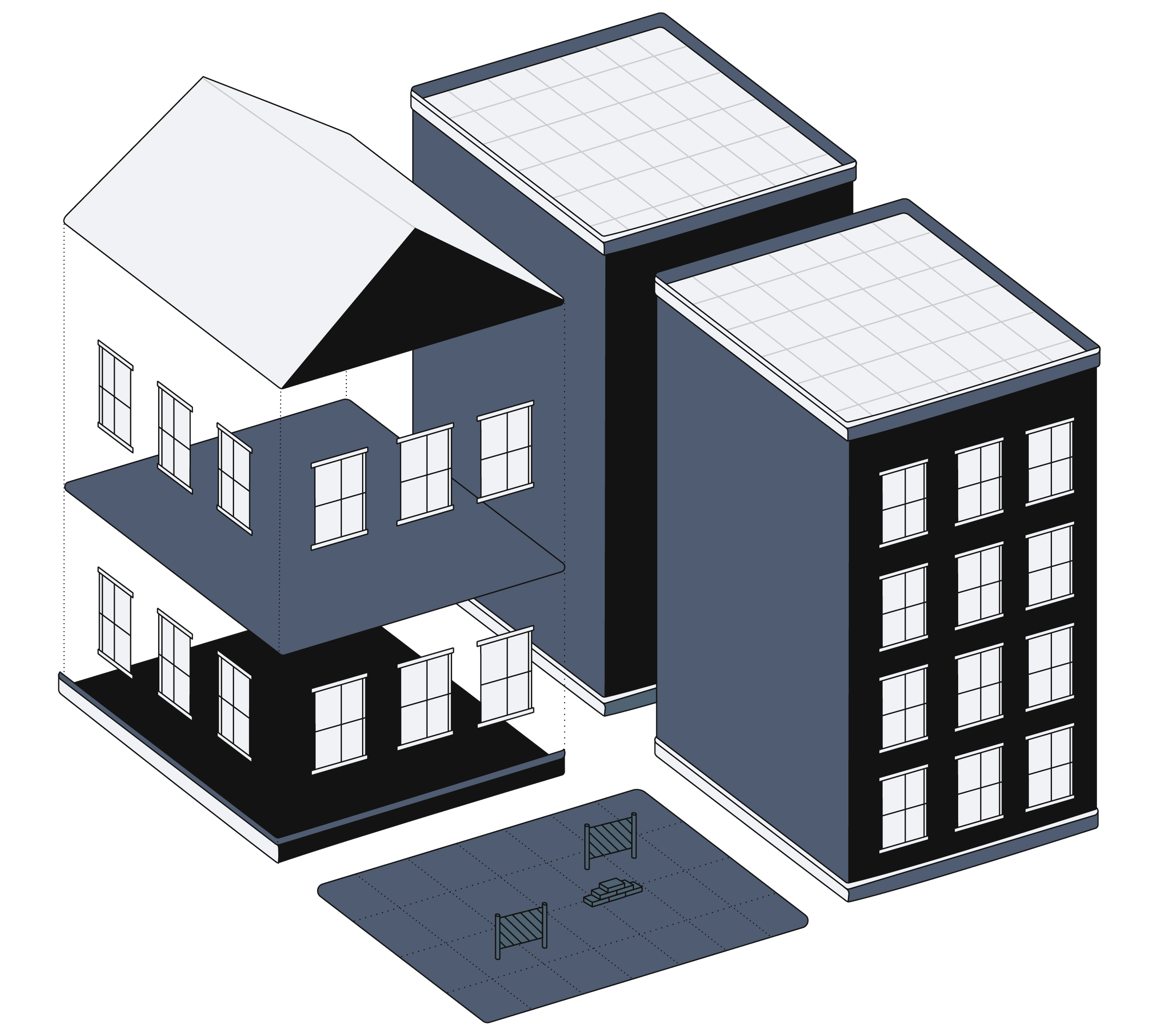
Are you prioritizing new homes and neighborhoods in infill locations where the infrastructure already exists to support this growth?
Cities should make it easier to build on vacant land in existing neighborhoods, including side lots, behind Main Street, or on underused parking lots. Connecting to water, sewer, and roads with available capacity will avoid costly new infrastructure.

How to Start
Step 01: Create a public land inventory and map.
Start by mapping your publicly owned land, then make a strategy for how to best use it. Many cities (like Boston, MA) are using municipal property advisers to convert these public assets into housing.
Benefits of Infill
01
Better for infrastructure
Uses existing infrastructure.
02
Better for the environment
Prevents sprawling development.
03
Better for towns
Makes neighborhoods more vibrant and efficient.
04
Better for budgets
Increases municipal tax base.
05
Better for health
Promotes walkable living and more community-oriented places.

SOLUTION IN ACTION
Designing for Equity and Engagement
Unlocking Infill in Sacramento, CA
“We’re bringing cities to the table not just to plan, but to act—and to build trust with their own residents in the process.”
–Dov Kadin, Senior Planner, Sacramento Area Council of Governments
Through years of consensus building across 26 local jurisdictions, the Sacramento Area Council of Governments helped local governments define Green Zones: designated corridors and districts ready for infill housing and mixed-use investment. Through a significant federal Reconnecting Communities Grant and another private grant, authorities are now moving forward on projects to improve infrastructure and build up to 8,000 potential infill units.
Read more to learn about Sacramento’s approach to ensuring planning is led in partnership with communities, not just for them.

Lessons Learned from Other Cities
Delivering on a community-centered vision
Let localities define the zones
Bottom-up visioning builds credibility.
Pair infrastructure with reform
Physical fixes alone won’t unlock housing.
Embed equity throughout
Engagement can’t be retrofitted.
INNOVATOR HIGHLIGHT
Frolic is a mission-driven real estate developer building cooperative housing communities using infill.

Frolic helps single-family homeowners transform their upzoned lots into small multi-family housing communities, creating affordable homeownership options while preventing displacement. Homes are accessible to low-wealth, middle-income families, widening the buyer pool and making starter-home production easier at scale , nationwide.
-
Searchable Planning Knowledge Base that centralizes zoning and policy guidance
Digital Fee Calculator that computes jurisdictional-specific permit and entitlement fees automatically
Guided Intake to ensure applicants upload all required materials upfront
Plan Checklist to standardize review and reduce revision cycles
Permitting System that routes reviews, tracks status, and keeps applicants updated
-
30-40 hours saved per week in staff time
45% increase in completed initial applications
Smoother onboarding and streamlined work-flows for planning staff = happy planners!
-
Infilla has partnered with the State of Delaware, San Francisco Planning, Sonoma County, CA, El Segundo, CA, Tulare County, CA, Richmond, CA, Mountain View, CA, and the NYC Department of Building via the Buildings Tech Lab.

POLICY WIN
Middle Housing Act in Washington State
Passed in 2023, HB1110 requires many cities to end exclusive single-family zoning mandates. It forces mid-size and large cities to allow “middle housing”—such as duplexes, triplexes, quadplexes, townhomes, and courtyard apartments—on lots previously restricted to detached single-family homes.
Frolic’s work in Seattle shows what this legislation makes possible. For example, Marra Commons creates 17 units across 3 lots, while maintaining ample outdoor space and a communal kitchen/living space for all residents.

What’s Next?
Download our Municipal Action Checklist to get started.
Previous Solution

Next Solution
